

What if the most expensive technical failures in your organization aren't caused by bad code, but by a fundamental breakdown in translation before the first line of development even begins? It's a sobering reality for many leaders who see sophisticated systems fail to scale or crumble under the weight of unforeseen technical debt. You likely recognize the frustration of watching a project drift away from its original business objectives as technical complexity takes over.
This guide empowers you to master a structured technical solution design process that bridges the gap between high-level strategy and robust execution. You'll learn how to translate complex business needs into scalable blueprints that drive measurable organizational value. We'll explore a repeatable roadmap for aligning your IT infrastructure with core business goals, utilizing modern frameworks like TOGAF 10 and ArchiMate 4 to reduce risk and ensure your architecture remains a strategic asset rather than a liability. By focusing on alignment and clarity, you can transform technical design from a hurdle into a significant competitive advantage.
Key Takeaways
- Learn how to bridge the gap between abstract business goals and concrete technical execution to prevent project drift and ensure long-term value.
- Discover the art of requirement elicitation to distinguish between surface-level stakeholder requests and the actual functional needs of the organization.
- Master a structured technical solution design process that incorporates scalability and feasibility checks to future-proof your infrastructure against technical debt.
- Follow a repeatable 5-step roadmap that moves from initial stakeholder alignment to precise technical modeling for more predictable implementation outcomes.
- Understand the strategic role of solution architecture in synchronizing IT infrastructure with high-level business vision for improved operational efficiency.
What is the Technical Solution Design Process?
The technical solution design process serves as the vital link between a company's strategic vision and its digital execution. While developers focus on the "how" of coding, this process determines the "what" and "why" of the entire system. It transforms abstract business requirements into a concrete, actionable blueprint. Without this phase, organizations often find themselves building high-quality software that unfortunately fails to address the actual operational bottlenecks it was intended to solve.
It's essential to distinguish Solution Architecture from general software engineering. Engineering is the act of construction; solution design is the architectural planning that precedes it. A solution architect acts as a strategic translator, ensuring that every technical decision supports a specific business outcome. In 2026, where modular standards like TOGAF 10 and strict regulations like the EU AI Act dictate the digital environment, a structured approach is the only way to maintain compliance and agility. This thinking provides a necessary buffer against the crushing weight of technical debt.
The Core Objectives of Strategic Solution Design
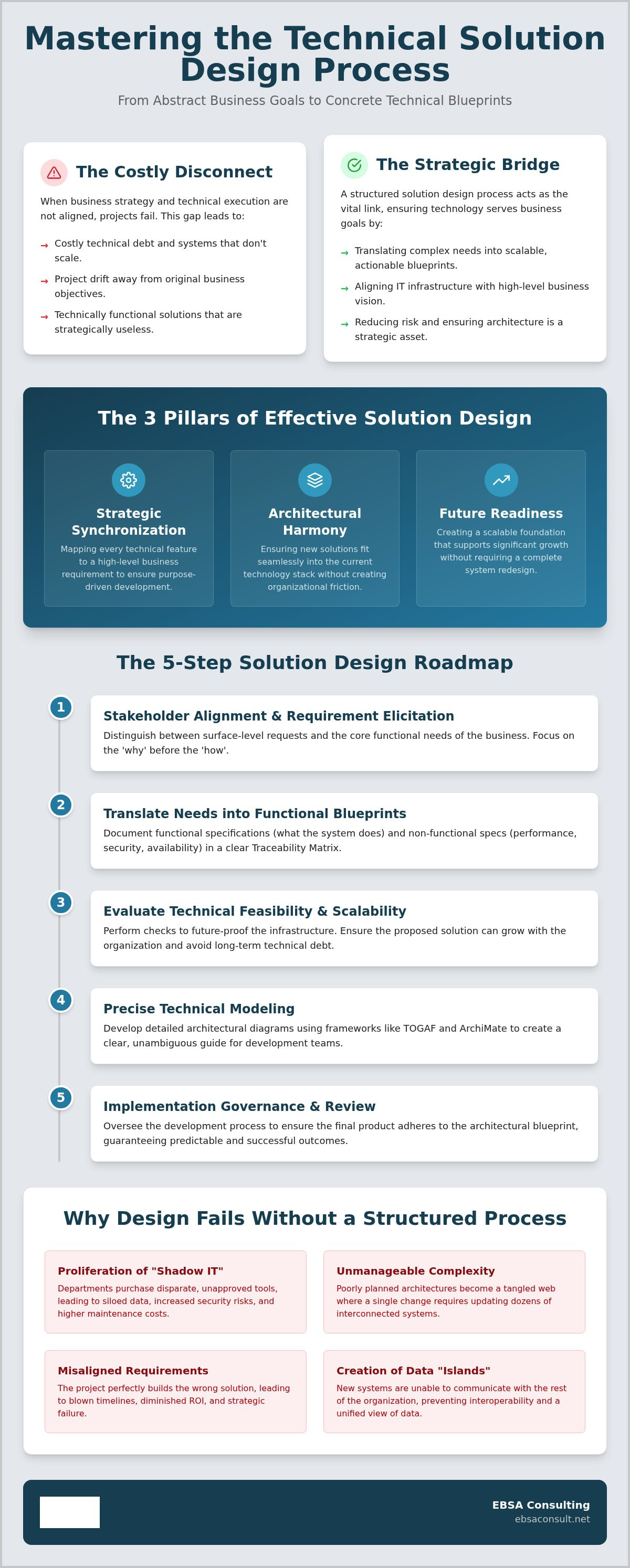
The primary goal is achieving total synchronization between IT capabilities and business objectives. When design is handled correctly, it ensures system interoperability within existing enterprise architecture consulting frameworks. This alignment prevents the creation of isolated "islands" of data that cannot communicate with the rest of the organization. Effective design focuses on three key pillars:
- Strategic Synchronization: Mapping every technical feature to a high-level business requirement to ensure purpose-driven development.
- Architectural Harmony: Ensuring new solutions fit seamlessly into the current technology stack without creating friction.
- Future Readiness: Creating a scalable foundation that supports significant growth without requiring a total redesign.
Why Design Fails Without a Structured Process
Design failures rarely stem from a lack of talent; they usually arise from a lack of structure. Without a formal process, "shadow IT" begins to proliferate as departments purchase disparate tools to solve immediate problems. This leads to siloed technical decisions that increase maintenance costs and security risks. Poorly planned architectures often result in unmanageable complexity, where making a single change requires updating dozens of interconnected systems. Ultimately, misaligned requirements lead to blown project timelines and a diminished ROI. This leaves the organization with a solution that is technically functional but strategically useless.
Translating Business Requirements into Functional Blueprints
The technical solution design process begins in earnest with the delicate art of requirement elicitation. High-level stakeholders often approach architectural teams with a list of features they believe they want, rather than the underlying business problems they need to solve. A strategic architect must look beyond these surface-level requests to uncover the core operational drivers. This involves a collaborative dialogue where we strip away technical jargon to understand the desired business outcome. By focusing on the "why" before the "how," we ensure the resulting architecture remains relevant to the organization's mission.
To ensure every technical decision remains grounded in reality, we utilize business architecture services to map organizational capabilities directly to technical components. This mapping process is often formalized through a Traceability Matrix. This document serves as a living record, ensuring that every piece of code or infrastructure serves a specific, documented business goal. It's the ultimate safeguard against scope creep and irrelevant feature development, providing a clear audit trail from executive vision to technical execution.
Defining Functional and Non-Functional Specs
Documenting functional requirements focuses on what the system does, but the success of the technical solution design process often hinges on the non-functional specifications. These include performance benchmarks, security protocols, and availability standards that must be established early in the design phase. We must balance the fluid demands of user experience (UX) with the rigid constraints of back-end infrastructure. Non-functional requirements are the hidden pillars of system stability.
Setting these benchmarks isn't a one-time task; it's a continuous negotiation. For instance, a requirement for "instant" data retrieval might clash with security protocols that require deep packet inspection. Resolving these conflicts during the design phase is significantly cheaper than refactoring a live system later. If you're looking to refine this alignment, engaging with a strategic solution design partner can provide the objective oversight needed to balance these competing priorities.
Visualizing the Technical Blueprint
Abstract concepts need visual clarity to gain executive buy-in. We use architectural diagrams to communicate complex system interactions to non-technical stakeholders, ensuring everyone understands how data flows across the enterprise. By adopting a component-based design, we prioritize modularity. This approach allows specific parts of the system to be updated or replaced without destabilizing the entire environment. Leveraging established frameworks like TOGAF 10 provides a common language and structure, maintaining consistency across the entire architectural lifecycle and ensuring the solution is ready for the rigors of a 2026 digital landscape.
Evaluating Technical Feasibility and Scalability
Every successful technical solution design process must move beyond theoretical requirements to confront the hard realities of infrastructure and risk. A robust design demands a cold, objective assessment of current capabilities against future ambitions. We start by evaluating the existing tech stack to determine the most viable path forward. The choice between integrating with legacy systems or opting for a total replacement is a high-stakes decision that dictates the project's long-term trajectory. Integration often preserves existing value but can introduce hidden complexities; replacement offers a clean slate but carries higher initial costs and migration risks.
Scalability analysis is a core pillar of this phase. We ask a fundamental question: Can this solution handle a 10x increase in load without requiring a total architectural redesign? This isn't just about adding server capacity; it's about ensuring data integrity and system performance remain stable as the organization expands. A thorough cost-benefit analysis of "Build vs. Buy" also helps leaders decide whether to develop a proprietary solution that offers a competitive edge or leverage established platforms to reduce time-to-market. By identifying technical bottlenecks before the implementation phase, we protect the organization from expensive mid-course corrections.
The Scalability Framework
Architects must choose between horizontal and vertical scaling strategies based on the specific needs of the workload. Horizontal scaling, or adding more nodes to a system, is often the preferred path for cloud-native environments because it offers greater elasticity. This approach allows the system to breathe, expanding and contracting based on real-time demand. Designing for this level of flexibility ensures that performance remains consistent even during sudden spikes in user activity. We prioritize data integrity throughout this growth, ensuring that as systems become more distributed, information remains accurate and synchronized across all nodes.
Risk Management in Architecture
Identifying single points of failure early prevents catastrophic outages after launch. We focus on "security by design," which integrates compliance and protection at the blueprint level rather than as an afterthought. This is particularly relevant given the EU AI Act's enforcement deadline on August 2, 2026, which necessitates robust oversight for any AI-driven components within a solution. Validating feasibility through a Proof of Concept (PoC) for high-risk elements allows us to test assumptions in a controlled environment. This methodical validation reduces implementation risk and ensures that the final technical solution design process results in a stable, reliable asset.
The 5-Step Solution Design Roadmap
Moving from abstract strategy to concrete implementation requires a methodical path. The technical solution design process is most effective when it follows a repeatable roadmap that ensures no critical detail is overlooked. This journey isn't just about technical choices; it's about building a consensus between what the business requires and what the technology can sustainably deliver. By following these five steps, architects can provide the stability and clarity needed for high-stakes digital transformations.
- Step 1: Discovery and Stakeholder Alignment. Establishing the "Why" by identifying core business drivers and executive expectations.
- Step 2: Requirement Analysis and Modeling. Defining the "What" through detailed functional mapping and capability modeling.
- Step 3: Architectural Design and Pattern Selection. Creating the "How" by choosing the right structures, such as microservices or event-driven models.
- Step 4: Feasibility Validation and Risk Assessment. Ensuring the "Can" by testing high-risk components and identifying potential bottlenecks.
- Step 5: Blueprint Finalization and Handover. Preparing the "Execution" by delivering a comprehensive technical package to the development teams.
Phase 1: From Discovery to Analysis
The initial phase focuses on uncovering latent business requirements that stakeholders might not explicitly state. We conduct deep-dive interviews to understand the operational context of the request. This allows us to define the precise scope of the solution architecture design process, ensuring that the project doesn't expand into unmanageable territory. We prioritize these requirements based on their potential business impact versus the technical effort required. This prioritization ensures that the team focuses on high-value features first, creating a logical sequence for development that respects both time and budget constraints.
Phase 2: Design and Validation
Once the requirements are clear, we move into selecting architectural patterns that best fit the organizational goal. Whether opting for microservices to enhance agility or an event-driven architecture for real-time responsiveness, the choice must be intentional. We also create a "Technical Debt Forecast" during this phase. This document helps business leaders understand the long-term maintenance needs and potential trade-offs associated with specific design choices. The final sign-off is a collaborative milestone; it's the moment where business leaders acknowledge the technical realities and trade-offs of the proposed blueprint. If you're ready to move from planning to a concrete roadmap, our experts can help you refine your solution architecture design to ensure it meets your long-term strategic vision.
Navigating Complexity with Strategic Solution Architecture
Complexity within modern enterprises often leads to a reactive posture where IT teams spend more time fixing immediate failures than designing for future growth. A structured technical solution design process allows you to shift this dynamic. By engaging a strategic guide, you can move from short-term troubleshooting to a proactive state of operational excellence. This transition is essential for leaders who want to ensure that their technology stack remains an enabler of business strategy rather than a source of constant friction. It's about moving beyond the stress of technical debt toward a future defined by stability and clear architectural vision.
EBSA Consulting bridges the gap between high-level enterprise vision and the technical blueprints required for execution. We don't just provide a set of instructions; we provide a strategic framework that synchronizes your infrastructure with your long-term goals. This collaborative approach ensures that every technical component is justified by a business need, preventing the waste of resources on features that don't drive organizational value. Our focus remains on creating harmony across your digital environment, allowing your team to execute with confidence.
Why Strategic Consulting Beats 'Implementation-First' Approaches
Many organizations fall into the trap of implementation-first thinking, often driven by software vendors who prioritize selling specific tools. This creates a natural bias toward certain technologies that might not be the right fit for your unique organizational agility. Strategic consulting provides the objective oversight needed to evaluate solutions purely on their ability to meet business objectives. In Singapore, this objectivity is particularly valuable when navigating national regulatory standards and a rapidly evolving tech landscape. We focus on providing the blueprint, ensuring that your architecture is built on proven methodologies rather than the latest marketing trends.
Partnering for Long-Term Success
Our role extends beyond the initial design phase; we act as a seasoned partner in ongoing governance and compliance. This is critical for maintaining the integrity of the technical solution design process as your organization evolves. We help you navigate the stricter enforcement of data privacy regulations and the emerging requirements of the EU AI Act, ensuring your designs remain compliant and resilient. This partnership facilitates smoother digital transformations by ensuring that every stakeholder remains aligned throughout the entire lifecycle of the project.
The first step toward a more resilient architecture is often an objective assessment of your current state. Conducting an architecture health check for your existing projects can reveal hidden technical debt and identify opportunities for better strategic alignment. If you're ready to refine your solution design for business requirements, we're here to help you navigate these complexities with a calm and steady presence that guarantees operational excellence.
Empowering Your Enterprise Through Strategic Architecture
Empowering your organization requires more than just deploying new tools; it demands a fundamental shift toward architectural excellence. By mastering a structured technical solution design process, you ensure that every digital investment translates into long-term organizational value. We've explored how a methodical 5-step roadmap, from discovery to blueprint finalization, protects your enterprise from the rising costs of technical debt and misaligned requirements. This approach bridges the critical gap between high-level business strategy and robust, scalable technical execution.
Achieving this level of precision requires an objective partner who understands the nuances of complex enterprise systems. EBSA Consulting specializes in Solution Architecture Design, providing the strategic alignment necessary to synchronize your IT infrastructure with your broader vision. Because we maintain no software vendor bias, our recommendations are driven solely by your unique operational needs and regulatory obligations.
Design your next technical solution with strategic precision—Contact EBSA Consulting today.
The path to digital transformation is complex, but with the right architectural framework, your organization can navigate any hurdle with confidence and clarity.
Frequently Asked Questions
What is the primary goal of the technical solution design process?
The primary goal of the technical solution design process is to translate complex business requirements into a robust, actionable technical blueprint. It ensures that every digital investment aligns with the organization's strategic vision rather than just solving a temporary problem. This alignment prevents the creation of siloed systems and ensures the final infrastructure supports long term growth and operational efficiency across the entire enterprise.
How does solution design differ from software development?
Solution design acts as the architectural blueprint, whereas software development is the actual construction of the system. While developers focus on writing code and implementing specific features, the design phase determines how those components interact within the broader enterprise ecosystem. It focuses on high-level strategy, security standards, and system interoperability. This ensures the technical foundation is stable before any development resources are committed.
When should an organization hire a solution architecture consultant?
Organizations should engage a consultant when embarking on high-stakes digital transformations or complex systems integrations. It's particularly vital when internal teams struggle to bridge the gap between executive vision and technical execution. A consultant provides an objective, vendor-neutral perspective that prioritizes organizational agility. This expertise is essential for navigating the modular standards of TOGAF 10 or complex regulatory environments found in Singapore.
Can the solution design process help reduce technical debt?
A structured technical solution design process is one of the most effective ways to mitigate technical debt. By identifying potential bottlenecks and scalability issues during the planning phase, architects avoid the need for expensive patchwork fixes later. It encourages the use of modular, component based designs that are easier to maintain. This proactive approach ensures the system remains flexible as business requirements evolve over time.
What are the most common mistakes in solution design for business requirements?
Common pitfalls include overlooking non-functional requirements like security and availability or failing to achieve deep stakeholder alignment early. Some organizations also fall into the trap of choosing technologies based on current trends rather than actual business fit. These mistakes often lead to systems that are technically functional but fail to scale or meet the organization's strategic needs. A disciplined design process mitigates these risks through rigorous validation.
How long does a typical technical solution design phase take?
The duration of the design phase depends entirely on the complexity and scope of the project. For straightforward integrations, the process might take three to six weeks. However, large scale enterprise transformations involving multiple legacy systems can require three to six months of detailed modeling and risk assessment. The goal is to invest enough time upfront to ensure the implementation phase proceeds without costly interruptions or redesigns.
Is solution architecture necessary for small-scale projects?
While the scale of documentation may differ, the fundamental principles of solution architecture are necessary for projects of all sizes. Even small scale initiatives can benefit from a clear blueprint to prevent future rework or integration issues. Without a basic architectural plan, small projects often grow into unmanageable islands of data. Applying a structured approach from the start ensures that even minor solutions contribute to the organization's long term agility.
How do you measure the ROI of a strategic solution design?
Measuring ROI involves looking at both cost savings and value generation. You can quantify ROI through reduced maintenance expenses, lower technical debt, and a faster time to market for future system updates. Additionally, a successful design ensures the final product directly supports key business KPIs, such as improved operational efficiency or enhanced user experience. These strategic outcomes provide a clear financial justification for investing in professional architectural consulting.


