

What if your architecture team functioned as a strategic growth engine rather than a bureaucratic gatekeeper? For many organizations, the reality is a persistent disconnect where visionary blueprints fail to influence tactical project delivery. This friction often leads to an enterprise architecture engagement model that's perceived as a bottleneck, resulting in mounting technical debt and frustrated stakeholders who feel the architecture process slows them down.
It's understandable why this happens when the bridge between high-level strategy and technical execution is missing. You've likely felt the pressure of trying to align IT investments with business outcomes while managing complex legacy systems. We're going to change that narrative. You'll learn how to structure a collaborative engagement model that fosters harmony between Business and IT, ensuring every technical decision serves a strategic purpose and supports long-term operational excellence.
This guide provides a repeatable framework for architectural involvement that moves beyond simple governance. We'll examine how to reshape your internal processes to improve stakeholder alignment and accelerate delivery across the organization. By the end, you'll have a clear path toward maximizing the ROI on your architecture consulting investments and driving national-scale digital agility through structured, visionary thinking.
Key Takeaways
- Learn why traditional "Ivory Tower" models fail and how to transform your team into a strategic enabler that bridges the gap between high-level vision and tactical delivery.
- Discover the essential components of a modern enterprise architecture engagement model, including clear service catalogs and formalized touchpoints that ensure consistent value delivery.
- Identify the right architectural archetype for your organization by comparing centralized, decentralized, and project-based approaches to find the best fit for your growth objectives.
- Follow a structured five-step roadmap to assess your current maturity, define stakeholder needs, and implement a repeatable framework for architectural involvement.
- Understand how integrating specialized solution architecture design into your delivery pipeline can eliminate technical debt and improve the ROI of your consulting investments.
The Evolution of the Enterprise Architecture Engagement Model
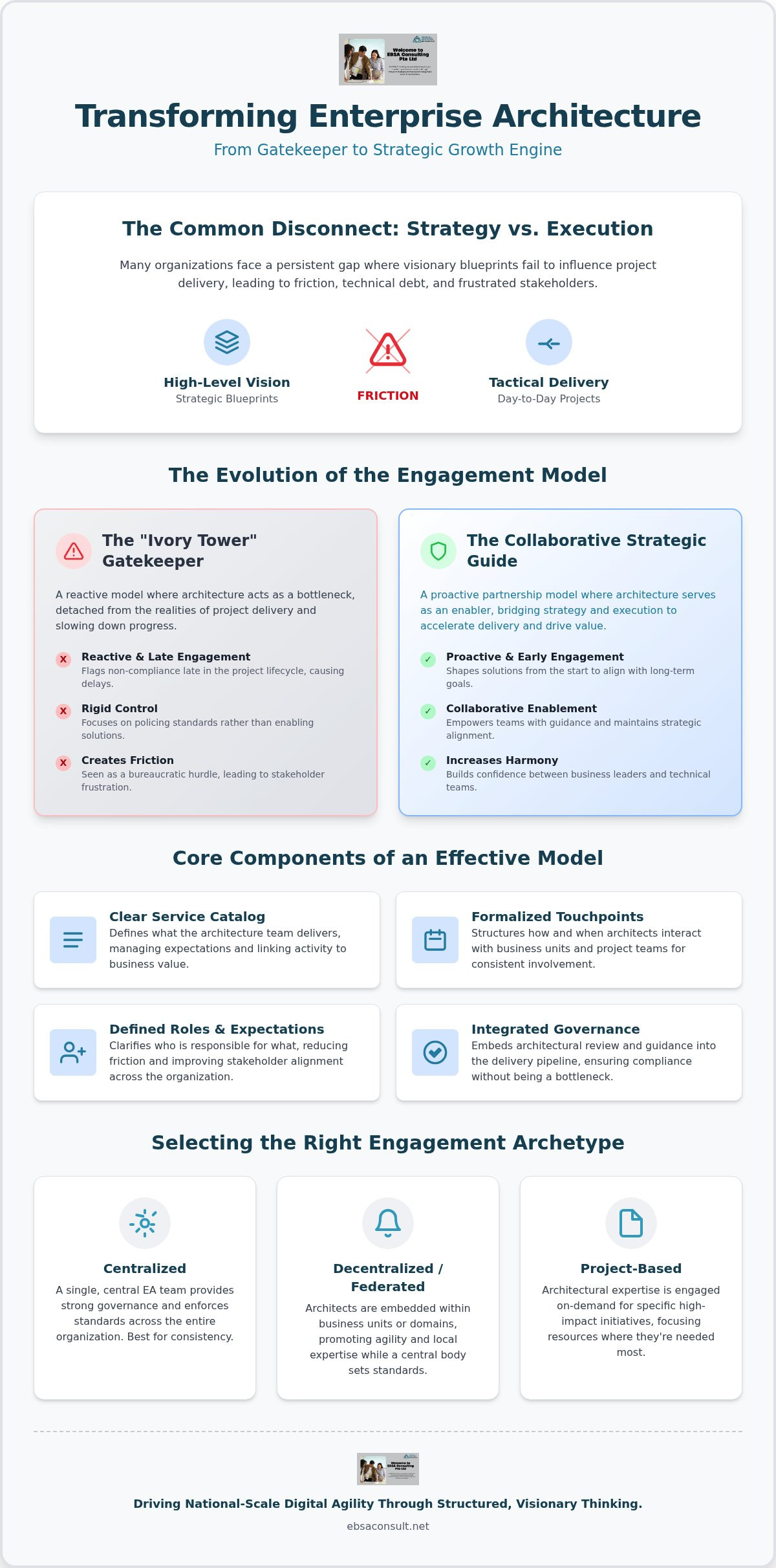
Historically, many organizations treated Enterprise architecture (EA) as a static repository of diagrams kept in a metaphorical "Ivory Tower." These models failed because they were detached from the daily realities of project delivery. Today, the enterprise architecture engagement model has evolved to become the essential bridge between high-level business strategy and technical execution. It's no longer about rigid control, but about creating a synchronized flow that moves the entire organization forward.
A modern enterprise architecture engagement model defines how architects interact with business units, ensuring that strategic blueprints don't just sit on a shelf. When this model is structured correctly, it reduces friction by clarifying roles and expectations. It shifts the focus from purely centralized governance to a more federated, collaborative enablement approach that empowers teams while maintaining alignment. This transformation allows technical teams to understand the "why" behind strategic mandates, while business leaders gain confidence that their vision is being translated into reality.
From Gatekeeper to Strategic Guide
The old "police" model of architecture was reactive. Architects would often show up late in a project's lifecycle, acting as a gatekeeper that delayed progress by flagging non-compliance. This approach doesn't work in a fast-paced digital environment. A proactive partnership model allows architects to serve as strategic guides. By engaging early, they help shape solutions that meet both immediate project needs and long-term business goals. For organizations looking to bridge this gap in cloud environments, IT Cloud Consulting offers specialized expertise to help adopt and optimize cloud technologies. This shift ensures that architectural intervention matches the velocity of the business rather than acting as a drag on it.
Several factors have accelerated the need for a more dynamic engagement approach. The rise of agile delivery and DevOps has changed how software is built, requiring architecture to be more fluid and integrated. In national-scale digital ecosystems, the complexity of interconnected systems makes it impossible for a single centralized body to oversee every detail. Instead, there's a growing need for continuous enterprise architecture consulting. This ongoing collaboration replaces one-off audits with a steady stream of expert guidance, helping organizations navigate transformation without losing sight of their core strategic vision. As complexity grows, the ability to synchronize various architectural layers becomes a primary competitive advantage.
Core Components of an Effective EA Engagement Model
An enterprise architecture engagement model is a formalized set of processes, roles, and touchpoints that define how architects interact with business units and project teams. It serves as the operational manual for the architecture function, moving beyond static frameworks to define real-world collaboration. Academic research into the Role of Engagement in Business-IT Alignment highlights that active stakeholder participation is the primary driver of architectural success. Without this structured approach, architecture remains a theoretical exercise rather than a practical tool for organizational growth.
To be effective, the model must start with a clear service catalog. This defines exactly what the architecture team delivers, transforming the department from a vague advisory body into a high-value service provider. By documenting these offerings, teams can manage expectations and demonstrate a direct link between architectural activity and business value.
Defining Architectural Services
Architectural services should be categorized by the specific value they provide to the organization. This includes business capability mapping to identify strategic gaps and visualize where the organization needs to invest. It also involves Solution Architecture Design for high-impact initiatives, ensuring that individual projects are built on a solid foundation. Finally, the service catalog must address technology stack consolidation. This proactive effort reduces technical debt by streamlining redundant systems and simplifying the overall environment.
Governance within a modern enterprise architecture engagement model prioritizes enablement over simple compliance. Instead of acting as a final hurdle, architects provide continuous support through defined interaction points. This ensures that guardrails are established early in the lifecycle, preventing costly rework. If you're looking to refine these touchpoints, exploring professional architecture consulting can help align your delivery pipeline with long-term strategic goals.
Interaction Points and Lifecycle Integration
Integration happens across three critical phases of the project lifecycle. During the strategic planning phase, architects help set the "north star," ensuring every proposed project aligns with the broader corporate vision. At project initiation, they define specific architectural guardrails that allow delivery teams to move fast without breaking core systems. Finally, during execution, the model provides continuous support to help teams navigate technical hurdles in real-time, maintaining the integrity of the original design.
Success in this model is measured through performance metrics linked to business outcomes rather than just technical standards. Instead of tracking the number of reviews completed, focus on the reduction in time-to-market or the percentage of projects that successfully meet their strategic objectives. This shift ensures the architecture function remains accountable to the business leaders it serves, creating a steady presence of reliability and operational excellence.
Selecting the Right Engagement Archetype for Your Organization
Every organization possesses a unique cultural and operational DNA. Consequently, the enterprise architecture engagement model you choose must align with your specific maturity level and growth trajectory. For businesses in Singapore, maintaining this operational integrity often involves partnering with specialists like DNA Accounting for essential corporate services, ensuring that the administrative foundation remains as resilient as the technical architecture. Selecting an archetype isn't just about reporting lines; it's about defining how expertise flows to where it's needed most. It ensures that architectural guidance is available at the right time without becoming a source of friction.
A project-based engagement archetype often serves as the best starting point for specific modernization initiatives. It focuses architectural energy on a high-impact goal, such as a legacy system overhaul or a major cloud migration. Conversely, firms aiming for long-term stability may prefer a continuous engagement model. This builds an enduring internal capability where architects are part of the daily rhythm of the business. For mid-sized or rapidly growing firms, the "Architecture-as-a-Service" model offers a compelling alternative. It provides access to executive-level strategic thinking on a flexible basis, ensuring you don't outgrow your technical foundations.
Large organizations often struggle with the balance between consistency and agility. A centralized "Center of Excellence" approach ensures that standards remain uniform across the entire enterprise. This is particularly useful for managing a national enterprise footprint where fragmented systems could lead to operational silos. However, a federated model embeds architects directly into business units. This creates a deeply collaborative environment where the architect understands the specific nuances of a department's needs. This partnership-driven mindset accelerates delivery because the architect is already "in the room" when decisions are made.
The Hybrid Consulting Model
Many successful organizations adopt a hybrid approach to bridge internal skill gaps. By leveraging external business architecture services, you can supplement your core team with specialized expertise for complex transformations. This isn't about replacing your staff; it's about synchronizing external insights with internal institutional knowledge. It allows your team to focus on daily operations while consultants handle the heavy lifting of capability mapping or strategic reshaping.
Integrating third-party consultants into your enterprise architecture engagement model requires a structured approach to ensure smooth workflows. Effective knowledge transfer is the hallmark of a healthy engagement. It ensures that once a specific design phase concludes, your internal team is fully equipped to maintain and evolve the new structures. This steady, methodical transition protects your long-term architectural health and ensures a clear ROI on your consulting investments.
Implementing Your Engagement Model: A 5-Step Roadmap
Transitioning from a theoretical framework to a functional enterprise architecture engagement model requires a methodical and structured approach. It isn't a one-time event but a strategic rollout that ensures organizational readiness at every level. By following a clear roadmap, you can minimize disruption while maximizing the impact of your architectural investments. This process moves the organization from reactive troubleshooting to a steady state of operational excellence.
Assessing Architectural Maturity
The first step involves a candid current state assessment. You must identify where "architectural friction" exists in your existing processes. Are project teams bypassing architecture because they perceive it as a bottleneck? Do your technical blueprints fail to influence actual delivery? Using health checks to baseline organizational alignment allows you to set realistic goals for your evolution. This assessment provides the data needed to bridge the gap between where you are and where you need to be to support strategic growth.
Stakeholder Management and Buy-In
Step two focuses on defining your stakeholders and their unique engagement needs. Success depends on communicating the value of architecture to non-technical leaders in a way that resonates with their business objectives. You're not just selling a technical standard; you're offering a path to efficiency and reduced risk. Creating a "shared responsibility" model for technical debt is essential here. When business owners understand that architectural shortcuts today lead to higher costs tomorrow, they become partners in maintaining the integrity of the ecosystem.
Once you've secured buy-in, the third step is to establish your service catalog and engagement guardrails. This formalizes the "contract" between the architecture team and the rest of the business. It clarifies what services are available, who is responsible for specific decisions, and how communication will flow across the project lifecycle. This clarity is the foundation of a predictable and reliable engagement process.
The fourth step is to pilot the model on a high-visibility project. Selecting a specific solution architecture design initiative allows you to test the model in a controlled environment. If you want to ensure your pilot is structured for success, engaging with a strategic guide can help you navigate the initial implementation hurdles. This hands-on phase provides the practical evidence needed to refine your approach before a full-scale rollout.
Finally, the fifth step is to iterate and scale. Use the feedback and ROI metrics from your pilot to adjust the model. This continuous improvement cycle ensures that your enterprise architecture engagement model remains relevant as the organization grows and market conditions shift. By maintaining this growth-oriented mindset, you ensure that architecture remains a visionary enabler of business transformation.
Maximizing Business Value with EBSA Consulting
EBSA Consulting specializes in crafting a bespoke enterprise architecture engagement model tailored to the unique requirements of national enterprises. We recognize that a standard approach often fails in complex, high-stakes environments. Instead, we focus on reshaping how your architectural function operates to deliver robust business results. By synchronizing technical blueprints with high-level strategy, we transform architecture from a documentation exercise into a driver of measurable growth. This methodical approach ensures that every technology investment is an intentional step toward your future state.
Integrating solution architecture design directly into your delivery pipeline is a core component of our methodology. This integration allows your teams to move with speed and confidence, knowing that the underlying structures are sound. We prioritize strategic technology roadmaps that aren't just lists of tools, but clear paths toward operational efficiency and competitive advantage. Our focus remains on the positive outcomes of transformation, helping you move past the stress of misalignment and toward a state of technical excellence.
The EBSA Partnership Philosophy
Our approach is rooted in a collaborative mindset. We don't just provide a service; we act as a strategic guide to empower your internal teams. Through our business architecture services, we help you achieve operational excellence by mapping capabilities to strategic outcomes. This commitment to vendor-neutral, strategic integrity ensures that your architectural decisions remain objective and focused solely on your organizational goals. We believe in building a steady presence of reliability that bridges the gap between vision and execution.
Ensuring Long-Term Architectural Success
Achieving lasting value requires more than a single intervention. It demands continuous support for your digital transformation roadmaps. Our expert consulting helps you reduce complexity and technical debt by identifying redundant systems and streamlining your technical landscape. This steady focus on improvement ensures that your organization remains resilient in the face of rapid change. We work closely with your leadership to ensure that the enterprise architecture engagement model we implement today continues to scale with your ambitions tomorrow.
The EBSA engagement model is a strategic partnership that synchronizes infrastructure with organizational vision.
Reshaping Your Organization for Architectural Excellence
Transitioning to a modern enterprise architecture engagement model is more than a simple process change; it's a strategic shift toward organizational harmony. You've explored how a structured service catalog and defined interaction points can eliminate the friction that often stalls digital transformation. By moving away from reactive governance and embracing a proactive partnership approach, your architecture team becomes a central pillar of growth rather than a perceived bottleneck.
Realizing this vision requires a proven methodology and a deep understanding of national enterprise scalability. Our Singapore-based expert consultants focus on bridging the gap between high-level strategy and technical execution to ensure your infrastructure remains resilient and aligned. If you're ready to synchronize your business vision with technical reality, you can Partner with EBSA Consulting for Strategic Architecture Design. Let's work together to build a foundation that accelerates your journey toward operational excellence and sustainable innovation.
Frequently Asked Questions
What is an enterprise architecture engagement model?
An enterprise architecture engagement model is a formalized set of processes, roles, and touchpoints that define how architects collaborate with business units and project teams. It acts as the operational manual for the architecture function, ensuring that strategic blueprints actually influence daily technical delivery. By establishing clear service catalogs and interaction points, the model transforms architecture from a static advisory body into a dynamic, service-oriented partner that drives organizational growth.
How does an engagement model differ from an EA framework like TOGAF?
While a framework like TOGAF provides the standards and taxonomy for "what" architecture should be, an engagement model defines "how" the work actually gets done. Frameworks offer the conceptual tools and structures, but the engagement model focuses on the human and process-driven interactions between stakeholders. It bridges the gap between high-level architectural theory and the practical realities of project execution, making it the essential operational layer for any successful architecture practice.
Why do organizations need a formalized architecture engagement model?
Organizations need a formalized model to prevent the architecture team from becoming a bottleneck or a disconnected "ivory tower." Without structured touchpoints, architectural guidance often arrives too late in the project lifecycle, causing costly rework and stakeholder frustration. A defined model ensures that architectural involvement is proactive and predictable. This reduces friction between technical teams and business leaders, fostering a steady environment where IT investments consistently support the broader corporate vision.
How do you measure the success of an EA engagement model?
Success is measured through performance metrics linked directly to business outcomes rather than purely technical standards. Effective indicators include a reduction in time-to-market for major initiatives and the percentage of projects that successfully meet their original strategic objectives. You should also track the rate of technical debt reduction and stakeholder satisfaction levels. These metrics provide a clear view of the ROI on your enterprise architecture engagement model and demonstrate the department's value to executive leadership.
Can an engagement model help in reducing technical debt?
Yes, a well-structured engagement model is a primary tool for reducing technical debt. By embedding architects early in the project lifecycle, the model ensures that solution architecture design includes necessary guardrails to prevent architectural shortcuts. This proactive approach identifies redundant systems and streamlining opportunities before they become embedded costs. It fosters a "shared responsibility" mindset where business owners understand the long-term financial impact of technical decisions, leading to more sustainable infrastructure.
What are the most common challenges in implementing a new EA engagement model?
The most frequent hurdles include cultural resistance and a lack of stakeholder buy-in. Many teams still perceive architecture as a rigid "police" function, making it difficult to establish a partnership-driven mindset. Overcoming these legacy habits requires clear communication about the value architecture provides to non-technical leaders. Another challenge is setting unrealistic goals for maturity. Successful implementation of an enterprise architecture engagement model usually starts with a pilot project to prove effectiveness before scaling across the entire national enterprise.
How should mid-sized firms approach architecture engagement?
Mid-sized firms often find success with an "Architecture-as-a-Service" archetype or a hybrid consulting model. This allows growing organizations to access executive-level strategic thinking without the overhead of a large permanent department. By leveraging external business architecture services for high-impact projects, these firms can build a scalable foundation while focusing internal resources on daily operations. This approach ensures that technical foundations don't become a drag on growth as the organization expands its national footprint.


